The Hatcher Pathology Fellowship
The Howard Hatcher Fellowship, administered by the Musculoskeletal Tumor Society (MSTS) Research Committee, has evolved to reflect the modern landscape of musculoskeletal oncology. It is specifically designed for candidates who seek to develop skills in molecular pathology as it pertains to precision oncology. Candidates will bridge the gap between traditional cellular morphological studies and the rapidly emerging cutting-edge fields of molecular pathology, genetics, and AI-digital pathology.
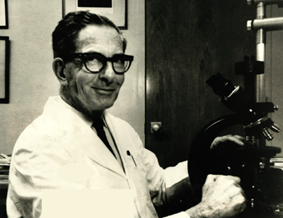 About Dr. Howard Hatcher (1900-1982): Dr Howard Hatcher was an orthopedic surgeon and pathologist remembered for significant contributions to bone pathology in the areas of bone tumors, radiation-induced sarcomas of bone, bone transplantation and bone necrosis. His academic career spanned over 50 years and he was chair of the Division of Orthopedic Surgery at both University of Chicago (1939-1960) and Stanford (1960-1969). His impact is also recognized through the contributions of his trainees, including Enneking, Bonfiglio, Mindell, and Campbell. These trainees were among the original MSTS co-founders and they jointly founded the Hatcher fellowship to support ongoing training in Orthopedic Pathology. Dr. Hatcher spent a formative year studying abroad in Austria under Erdheim, and thus his fellowship aims to support international training in pathology for dedicated orthopedic oncologists. About Dr. Howard Hatcher (1900-1982): Dr Howard Hatcher was an orthopedic surgeon and pathologist remembered for significant contributions to bone pathology in the areas of bone tumors, radiation-induced sarcomas of bone, bone transplantation and bone necrosis. His academic career spanned over 50 years and he was chair of the Division of Orthopedic Surgery at both University of Chicago (1939-1960) and Stanford (1960-1969). His impact is also recognized through the contributions of his trainees, including Enneking, Bonfiglio, Mindell, and Campbell. These trainees were among the original MSTS co-founders and they jointly founded the Hatcher fellowship to support ongoing training in Orthopedic Pathology. Dr. Hatcher spent a formative year studying abroad in Austria under Erdheim, and thus his fellowship aims to support international training in pathology for dedicated orthopedic oncologists.
Goals
The Hatcher Fellowship is designed to fund available opportunities that will further the candidate’s knowledge of state-of-the-art molecular pathology towards precision oncology. The candidate will attend the Madrid Bone & Soft Tissue Tumor Course (Bone and Soft Tissue Tumors – BSTT Madrid Course), AACR Molecular Pathology Course (https://www.aacr.org/professionals/meetings/meetings-and-workshops-calendar/), Gordon Research Conference (https://www.grc.org), or a similar course, aiming to improve cutting-edge pathology knowledge that will guide their research beyond traditional H&E-staining-based descriptive histopathology. Upon completion, the recipient should be equipped with the traditional pathology as well as research skills necessary to apply these modern pathology elements such as, but not limited to AI, molecular pathology, immune-oncology, and molecular oncology, to enable precision oncology or improve patient care or education. It is expected that the applicant should be able to apply the knowledge and techniques not only to patient care but also to enhance scholarly activities such as scientific abstracts, grants, and manuscripts to advance the musculoskeletal oncology field. The course attendance needs to be linked to the candidate’s career and academic advancement plans in addition to enhanced patient care.
The Hatcher Fellowship can be combined with the MSTS Early-Stage Investigator Enrichment Program Grant, which provides structured mentorship with additional funding. If applicants seek to combine both the Hatcher Fellowship and MSTS Early-Stage Investigator Enrichment Program Grant, the applicant should apply for both grant mechanisms separately. Such applicants will indicate the intention of combining the the Hatcher Fellowship and MSTS Early-Stage Investigator Enrichment Program Grant in each application package.
Eligibility
- Applicants must be MSTS Candidate members or Active members within the first 6 years of practice. Applicants must have completed an orthopaedic surgery residency or its equivalent.
- Applicants must obtain a detailed fellowship plan before seeking support from the Fellowship fund.
Selection Process: The MSTS Research Committee and Mentoring Group will review the applications, and interviews of the applicants may take place before the selection of the final awardee.
Application Timeline
Announcement: April 1st, 2026
Applications due: July 31st, 2026
Notice of Award: October 1st, 2026
Funding Period: Funding can be spent up to 2 years
Funding amount: Up to $8,500/Award
Number of Awards: One Award Annually
Application Requirements
- Application Cover: Please complete this form, attach your study plan and budget and email to [email protected].
- Study Plan: A 3-page detailed description of the duration, location, and specific method of the study period. Emphasize how the pathology knowledge gained will further your research and lead to benefits for patients. Include documentation from the director (mentor) of the chosen pathology training course or institutions. The candidate may attend highly regarded courses such as, but not limited to, Bone and Soft Tissue Tumor Courses in Madrid, Bologna, Padova, and other locations (https://bstt-madridcourse.com), American Association of Cancer Research Workshops or Conferences, Gordon Research Conference, and others.
- Budget: A breakdown of how the fund will be used during the study period, including disclosure of other support sources (e.g., the MSTS ESI Enrichment Program).
- Knowledge Translation: The winner will share their newly gained knowledge during the MSTS business meeting, MSTS Scientific Session, and MSTS Media. In addition, a mid-experience and end-of-experience report will be due, describing how the goals were met and how it enriched the awardee’s academic pursuits. It is strongly encouraged to apply for institutional or external grant programs.
MSTS ESI Enrichment Program: The Howard Hatcher Fellowship Award may be combined with the MSTS Early-Stage Investigator Enrichment Program (an additional $25,000 award that can be spent for up to 3 years). The applicant should apply for the MSTS ESI Enrichment Program separately. If the applicant applies for both the MSTS ESI Enrichment Program and the Howard Hatcher Fellowship, it should be stated in the Application Package.
|